Industry Knowledge & News

Cosmetics Industry Blog & Insights

Expert formulation guidance, private label manufacturing trends, and clean beauty innovations from NK Cosmetics.

Expert Beauty Resources

Formulation Trends & Standards

Discover helpful guides for beauty brand founders, product developers, and overseas sourcing experts.

Blog

How to Find a Private Label Eye Makeup Manufacturer in 2026

How to Find a Private Label Eye Makeup Manufacturer in 2026

Finding the right private label eye makeup manufacturer in 2026 requires more than comparing prices and catalog photos. The global beauty industry is expanding, but buyers now demand stronger evidence, faster innovation, and safer formulations. McKinsey’s The Business of Beauty report projects the global beauty market could reach about $580 billion by 2027, with annual growth near 6%. That opportunity attracts many suppliers. It also creates more room for weak claims. Market pressure is visible in everyday details. A mascara wand must lift lashes without scratching the eyelid. An eyeshadow palette needs consistent pigmentation across matte and shimmer shades. Packaging should survive a humid warehouse, not only look attractive on a sample table. NIQ’s 2024 State of Beauty report highlights consumers’ growing focus on value, transparency, and product performance. Therefore, brands should examine ingredient traceability, batch records, stability testing, microbial testing, and shade consistency before signing a contract. Start with evidence. This guide explains how to assess factory experience, formulation capability, minimum order quantities, sampling procedures, and production controls. It also considers documentation for major markets, including the United States, European Union, United Kingdom, and ASEAN regions. Requirements differ, so a supplier’s general compliance statement is not enough. Ask for current certificates, test reports, responsible-person support, and clear claims substantiation. ISO 22716 or equivalent cosmetic good manufacturing practice can strengthen confidence, but certification alone does not guarantee every product is suitable. A practical checklist helps reduce costly surprises. Still, no checklist is perfect. Supplier visits, independent testing, and careful communication remain necessary. The best partnership is not always the cheapest one. It is the manufacturer that can repeatedly deliver safe, attractive eye makeup with reliable documentation and honest limitations.
Read more »
Charlotte By:Charlotte - September 11, 2026
Top 10 Custom Liquid Foundation Formulation Suppliers?

Top 10 Custom Liquid Foundation Formulation Suppliers?

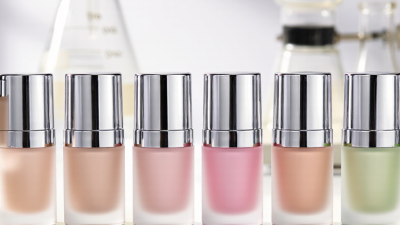
The search for reliable custom liquid foundation formulation suppliers begins with more than a polished product sample. It requires technical evidence, consistent communication, and proven manufacturing discipline. McKinsey & Company’s 2023 beauty market report projects the global beauty industry could approach $590 billion by 2030. Makeup remains an important growth category, while consumers increasingly expect comfortable textures, shade inclusivity, skincare benefits, and dependable wear. Circana also reported strong growth in U.S. prestige makeup sales during 2023. These figures show opportunity, but they do not guarantee supplier quality. A good foundation supplier should understand pigment dispersion, emulsion stability, oxidation control, preservative systems, and skin-feel testing. Packaging compatibility matters too. A formula can look beautiful in a beaker, then separate inside a pump bottle. That happens. Cosmetic chemist Perry Romanowski has described formulation as “both an art and a science.” His observation fits liquid foundation development closely. Laboratory accuracy matters, but so do sensory judgment and practical production experience. This guide reviews ten suppliers associated with custom liquid foundation formulation. The comparison considers formulation capability, sampling support, minimum order quantities, testing practices, manufacturing capacity, documentation, and international communication. Public information is not always complete. Supplier claims may also change over time. Therefore, this list should support due diligence, not replace it. Brands should request stability data, ingredient documentation, microbial testing, color-matching procedures, and regulatory support before signing a contract. A low quotation may hide expensive revisions. The right partner should help transform a shade concept into a stable, scalable, and commercially realistic foundation.
Read more »
Charlotte By:Charlotte - September 11, 2026
What Is Private Label Lip Balm Manufacturing?

What Is Private Label Lip Balm Manufacturing?

Private label lip balm manufacturing allows a brand to create lip care products without owning a factory. The manufacturer usually manages formulation, sourcing, filling, packaging, and batch production. A brand chooses the product direction, such as a clear balm, tinted stick, or botanical formula. It may also select the tube color, label finish, and scent profile. The work begins with a practical conversation. Experienced manufacturers ask about target customers, climate, packaging preferences, and expected order volume. These details affect wax selection, oil balance, glide, firmness, and melting resistance. A balm can feel smooth in a cool office but soften inside a delivery truck. Small choices matter. Texture matters. So does stability. Reliable private label lip balm manufacturing requires documented quality procedures. A responsible partner should provide samples, ingredient specifications, batch records, and appropriate safety information. Production areas should be clean, controlled, and suitable for cosmetic manufacturing. Testing may examine appearance, odor, texture, packaging compatibility, and product stability. However, no formula is perfect for every market. A natural-looking balm may feel less glossy. A firmer stick may drag during application. Brands should test products with real users before placing large orders. They should also ask how ingredients are sourced and how manufacturing consistency is monitored. That honesty builds trust. The best partnerships involve more than attractive packaging. They combine technical knowledge, clear communication, and careful review. Manufacturers should explain limitations instead of promising instant results. Brands should question assumptions, record feedback, and revise the formula when evidence requires it. In practice, thoughtful private label lip balm manufacturing turns a simple balm into a dependable product experience.
Read more »
Charlotte By:Charlotte - September 11, 2026