Expert formulation guidance, private label manufacturing trends, and clean beauty innovations from NK Cosmetics.
Discover helpful guides for beauty brand founders, product developers, and overseas sourcing experts.
Face primer has moved beyond a simple makeup-preparation step. It now supports oil control, hydration, pore-blurring, skin comfort, and improved foundation wear. McKinsey’s The State of Fashion: Beauty report estimates that the global beauty market could reach approximately $580 billion by 2027. That growth creates space for specialized formulation partners. It also raises expectations.
A reliable custom face primer formula developer must connect consumer insight with laboratory discipline. The developer should understand silicone systems, water-based emulsions, film-forming polymers, powders, pigments, preservatives, and fragrance sensitivities. Circana reported that U.S. prestige makeup sales increased strongly in 2023, with complexion products benefiting from renewed consumer interest. These figures do not prove that every primer will succeed. They show why texture, wear, and visible skin finish deserve careful validation.
This article presents 10 leading custom face primer formula developers worldwide. The selection considers formulation experience, technical facilities, testing practices, communication, minimum order flexibility, and support for brand-scale production. Ingredient traceability matters. So does stability testing under heat, humidity, and repeated opening. A primer may feel silky at room temperature, yet separate inside a warm delivery truck. That detail can determine customer trust.
The list is not absolute. Regional strengths differ. Some developers excel at clean-label positioning, while others provide stronger color cosmetics expertise or faster sampling. Buyers should still verify claims, certifications, compatibility data, and regulatory documentation before signing a manufacturing agreement. Independent evaluation remains essential.
The best formula is not merely elegant. It is repeatable, compliant, commercially realistic, and pleasant on real skin. That standard guides this global comparison.
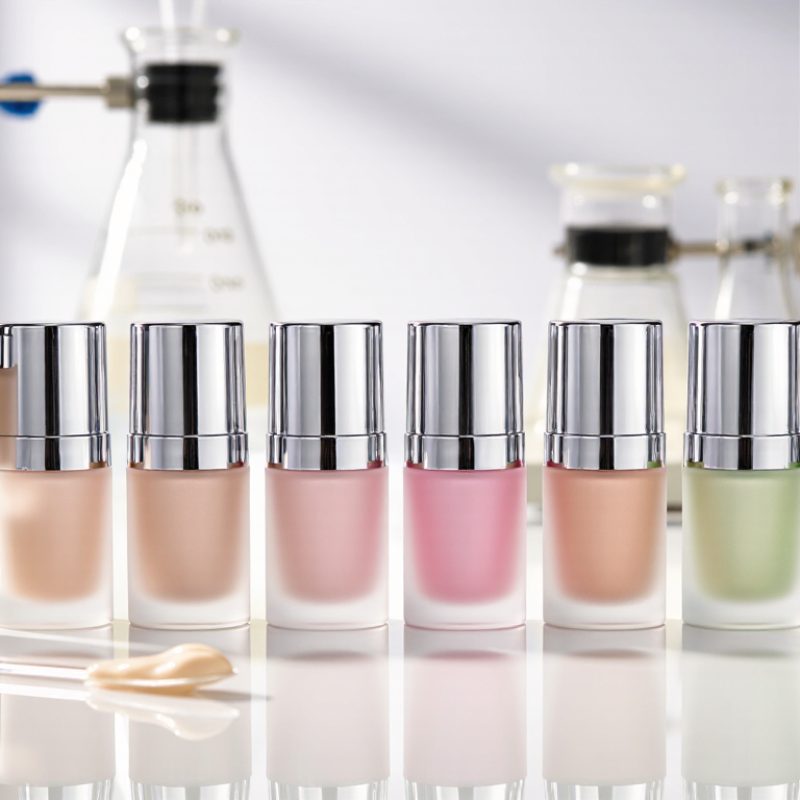
Custom face primer development begins with a precise product brief. Developers define skin type, finish, shade, wear time, and application method. A hydrating primer may need glycerin, lightweight emollients, and film-forming polymers. A blurring formula requires careful powder selection and particle dispersion. The first texture is often wrong. It may feel smooth in a beaker but pill under foundation.
Laboratories then create small prototypes and compare them against clear performance targets. Experts test spreadability, tack, absorption, pilling, shine control, and compatibility with makeup. Stability testing checks changes under heat, cold, light, and repeated opening. Packaging interaction matters too. An airless pump can protect sensitive ingredients, while a wide-mouth jar may increase contamination risk. ISO 22716 cosmetic good manufacturing practices support controlled production and reliable batch records.
Market data influences these decisions. McKinsey’s 2023 beauty industry report projected the global beauty market could reach about $580 billion by 2027, with annual growth near 6%. That growth increases demand for products with credible claims and pleasant daily use. However, development teams should question attractive laboratory results. Consumer skin varies, and a primer that performs well on one foundation may separate on another. Pilot batches reveal these weaknesses before scale-up. In practice, reformulation is normal, not failure. A small change in polymer level can improve grip, though it may reduce softness.
Comparing global custom face primer formula developers requires more than checking a sample’s texture. McKinsey’s 2023 beauty report projects the global beauty market will approach $590 billion by 2028. That growth increases pressure for reliable, scalable formulation partners. Assess each developer’s experience with silicone, water, gel, and hybrid systems. Ask for stability data, preservative challenge results, compatibility testing, and pilot-batch records. A smooth sample is not enough. It may fail after eight weeks at 40°C or separate inside a pump bottle.
Technical expertise should match the intended market. Review the developer’s knowledge of regional ingredient restrictions, labeling rules, allergen declarations, and ISO 16128 guidance for natural-origin claims. Their quality system should include traceable raw-material documents and controlled batch records. Sustainability also deserves evidence. The 2023 Cosmetics Europe market report valued European cosmetics and personal care sales at approximately €88 billion, showing the scale of consumer expectations. Still, environmental claims can be vague. Request packaging compatibility tests, biodegradability evidence, and measurable waste-reduction plans.
Tips: Use a weighted scorecard. Give stability and safety 30%, sensory performance 20%, compliance 20%, scale-up 15%, and communication 15%. Test at least three pilot batches. Record slip, absorption time, pilling, shine control, and makeup wear under real humidity. No scorecard is perfect. Small sensory differences can change consumer acceptance, and laboratory results may not predict every climate. Reflect after each trial, then adjust the criteria rather than defending an early decision.
Custom face primer formula developers worldwide help brands turn texture ideas into stable, wearable products. The strongest development teams study skin feel, climate, makeup compatibility, and packaging together. A primer may feel silky in a laboratory, yet pill under foundation in humid conditions. Small details matter, such as powder loading, silicone balance, absorption speed, and pump performance.
Reliable developers usually begin with a clear product brief. They may test samples on different skin types, assess shine after several hours, and review microbial protection and stability data. Regional requirements also deserve attention, especially when a formula will enter multiple markets. A professional team should explain testing limits, ingredient functions, and possible trade-offs in plain language. No sample is perfect.
Tips: Ask for a documented development plan, sample revision policy, stability schedule, and packaging compatibility check. Request realistic claims support rather than attractive promises. Compare formulas after four hours, not only after application. Keep notes on pilling, tightness, fragrance, and foundation wear. A developer who welcomes criticism is often more dependable than one promising instant perfection. Testing should include temperature changes, because a formula can separate after transport even when it looks flawless on day one.
Custom face primer formula developers work across several technologies, depending on skin feel and makeup performance. Silicone elastomers can create a soft-focus effect and reduce visible texture. Lightweight esters improve slip without leaving a heavy finish. Film-forming polymers help foundation adhere during long wear. Developers must balance these materials carefully. Too much film former can feel tight.
Ingredient selection also depends on the intended skin profile. Glycerin and panthenol support hydration, while absorbent powders can reduce surface shine. Niacinamide may suit a skincare-led concept, but its stability requires careful testing. Preservatives, emulsifiers, and pH adjusters remain essential for product safety. Natural ingredients are not automatically safer. That assumption needs review.
Product format changes the user experience. Silicone gels spread quickly and suit pore-blurring primers. Cream emulsions offer more comfort for dry or mature skin. Balms can provide richer smoothing, but they may affect foundation layering. Stick formats improve portability and controlled application. Airless packaging can limit contamination and protect sensitive formulas. In development work, I would test rub-off, pilling, oxidation, and compatibility with several foundation types. A primer may feel beautiful on bare skin yet fail under makeup. Small panel tests often reveal this gap. Temperature stability and repeated-use testing should guide final adjustments.
Indicative typical use levels of widely used face-primer formulation technologies and ingredients. The data represents formulation practices, not company or brand performance.
Typical use levels vary by product format, supplier grade, regulatory market, sensory target, and compatibility with the complete formula.
How Brands Select the Right Formula Development Partner
Choosing a custom face primer developer requires more than reviewing a glossy sample. McKinsey’s 2023 beauty report estimates the global beauty market could reach $580 billion by 2027. That growth increases pressure to launch quickly, but speed should not replace technical discipline. Brands should examine the developer’s experience with silicone, water-based, hybrid, and sensitive-skin formulas. Ask for stability records, compatibility testing, and documented preservative challenge results.
A strong partner translates a brief into measurable targets: slip, dry-down time, pore-blurring effect, oil control, and makeup wear. The evaluation should include laboratory data, pilot-batch performance, and clear regulatory files. Supplier audits also matter. A clean development room and traceable raw-material records reveal more than a persuasive presentation. Circana reported continued growth in prestige beauty during 2023, showing how consumers still reward perceived performance and quality. Yet performance claims require evidence, not attractive language.
A polished sample can still mislead. Brands should test the primer across climates, packaging formats, and foundation types. Independent sensory panels may expose pilling or uneven texture that internal teams miss. Cost transparency is equally important, including minimum order quantities, reformulation fees, and scale-up risks. The best partner communicates setbacks early, even when the news is inconvenient. That honesty may prevent an expensive launch mistake.
A company-neutral comparison framework based on formulation capability, testing readiness, regulatory support, and commercialization fit
| Rank | Developer Profile | Best Fit for Brands | Core Primer Formats | Key Technical Capabilities | Recommended Validation Package | Typical Development Window | Selection Priority |
|---|---|---|---|---|---|---|---|
| 1 | Global Full-Service Formulation Partner | Brands planning launches across multiple regulatory markets | Silicone, water-based, gel, blurring, illuminating, and hybrid primers | Emulsion design, sensory optimization, pigment dispersion, preservative strategy, and scale-up support | Stability, freeze-thaw, centrifuge, compatibility, preservative efficacy, microbiological, and packaging tests | 12–24 weeks | Very High |
| 2 | Prestige Makeup Specialist | Premium brands prioritizing finish, slip, and sensory elegance | Silicone elastomer, soft-focus, luminous, and skin-conditioning primers | Particle-size control, optical blurring, after-feel tuning, and makeup-grip optimization | Instrumental texture testing, sensory panel assessment, stability, and compatibility testing | 10–20 weeks | Very High |
| 3 | Clean-Beauty Formulation Specialist | Brands requiring silicone-free, naturally derived, or retailer-specific concepts | Water-based, oil-gel, natural-emulsifier, and silicone-free primers | Natural rheology modifiers, emulsifier selection, oxidation control, and compliant ingredient screening | Stability, microbiological testing, preservative efficacy, natural-origin documentation, and claim substantiation | 12–24 weeks | High |
| 4 | Dermocosmetic Formulation Partner | Skin-focused brands combining makeup preparation with skincare benefits | Hydrating, barrier-supporting, oil-control, and sensitive-skin primers | Humectant systems, barrier-support ingredients, low-irritation design, and claim-support planning | Safety assessment, stability, microbiological testing, compatibility, and appropriate consumer or clinical studies | 14–28 weeks | High |
| 5 | Color Cosmetics Development Lab | Brands that need seamless compatibility with foundation and complexion products | Tinted, tone-correcting, mattifying, illuminating, and makeup-gripping primers | Pigment dispersion, shade adjustment, pilling reduction, transfer control, and layering compatibility | Foundation compatibility, rub-off, pilling, stability, packaging compatibility, and consumer wear evaluation | 8–18 weeks | High |
| 6 | High-Performance Silicone Specialist | Brands seeking pore-blurring, smooth application, and long-wear performance | Silicone gel, elastomer, oil-control, matte, and blurring primers | Volatile and non-volatile silicone balance, elastomer networks, sebum control, and sensory refinement | Stability, viscosity, spreadability, pilling, transfer, wear-time, and packaging compatibility testing | 8–16 weeks | High |
| 7 | Indie Brand and Startup Partner | Emerging brands needing flexible minimums and efficient prototype cycles | Basic gel, cream, water-based, and hybrid primer systems | Rapid prototyping, cost-aware ingredient selection, small-batch development, and formula customization | Core stability, microbiological testing, preservative efficacy, packaging compatibility, and safety documentation | 6–16 weeks | High |
| 8 | Mass-Market Scale-Up Partner | Brands requiring repeatable quality, high-volume manufacturing, and cost control | Cost-optimized gel, lotion, silicone, and hybrid primer formats | Process robustness, raw-material availability, batch reproducibility, and manufacturing transfer | Pilot batches, accelerated stability, process validation, microbiological testing, and packaging compatibility | 12–22 weeks | High |
| 9 | Regulatory and Compliance-Led Developer | Brands entering tightly regulated or multi-region markets | General cosmetic primers with market-specific ingredient and claim requirements | INCI review, restricted-substance screening, product information files, claims review, and safety documentation | Safety assessment, stability, microbiological quality, preservative efficacy, claims evidence, and market compliance review | 14–30 weeks | High |
| 10 | Sustainable Packaging and Formula Partner | Brands developing lower-impact formulas and packaging systems | Waterless, concentrated, refill-compatible, low-water, and lightweight emulsion primers | Formula-pack compatibility, anhydrous systems, material compatibility, refill design, and lifecycle-oriented development | Stability, microbial risk assessment, packaging compatibility, transport testing, and substantiation of sustainability claims | 14–28 weeks | Medium–High |
Developers balance skin feel, makeup grip, shine control, and comfort. Too much film-forming material may feel tight. The balance is rarely perfect.
Silicone elastomers can soften visible texture. Lightweight esters improve spreadability. Glycerin and panthenol support hydration, while powders reduce surface shine.
No. Natural ingredients still require safety, stability, and preservation testing. That assumption needs review.
Cream emulsions often provide a more comfortable finish. Balms feel richer but may interfere with foundation layering. Testing remains necessary.
Airless packaging can reduce contamination during repeated use. It may also protect sensitive formulas from air exposure. Packaging is part of formula performance.
Test rub-off, pilling, oxidation, temperature stability, and repeated use. Check several foundation types. Bare-skin performance is not enough.
Request stability records, preservative challenge results, compatibility data, and regulatory files. Review pilot batches, supplier records, and development-room conditions.
Heat, humidity, and packaging can change texture and stability. A primer may spread well in a cool room yet pill in humid weather. That gap is easy to miss.
Discuss minimum order quantities, reformulation charges, testing costs, and scale-up risks. Attractive samples can hide expensive problems.
A reliable partner reports setbacks early and explains the evidence clearly. Honest communication may prevent a failed launch. It is not always convenient.
Choosing the right custom face primer formula developer is an important step for brands seeking to create effective, market-ready products. The development process typically begins with defining the primer’s purpose, target skin type, texture, finish, and performance goals, followed by ingredient selection, laboratory testing, stability evaluation, and sample refinement. Leading developers may work with technologies such as hydration support, oil control, blurring, pore-smoothing, radiance enhancement, and long-wear adhesion while offering formats including creams, gels, balms, liquids, and silicone-free alternatives.
When comparing global primer formula developers, brands should evaluate technical expertise, formulation flexibility, testing capabilities, production scalability, communication, documentation, and regulatory awareness. The best partner can translate a brand concept into a consistent formula while balancing sensory appeal, ingredient compatibility, safety, packaging requirements, and target-market expectations. A structured selection process helps brands identify a custom face primer formula developer that can support efficient development, reliable quality, and successful product positioning from initial concept through commercialization.