Vegan skincare contract manufacturing connects plant-based formulation with the practical demands of modern beauty brands. It involves research, ingredient sourcing, testing, filling, packaging, and quality control under one manufacturing partnership. The process can look simple on a product page. It rarely is.
Grand View Research estimated the global vegan cosmetics market at approximately USD 16 billion in 2023, with continued growth expected through 2030. Its findings suggest rising demand for cruelty-free formulas, transparent ingredients, and environmentally conscious packaging. Meanwhile, Euromonitor International continues to identify ethical consumption and clean-label claims as important beauty-market influences. These reports show opportunity, but they do not remove responsibility.
Cosmetic chemist Perry Romanowski offers a useful reminder: “Natural does not mean safe, and synthetic does not mean unsafe.” That principle matters deeply in vegan skincare contract manufacturing. A botanical extract still needs stability testing. A vegan preservative system still needs protection against microbial growth. A glass jar still creates transport emissions.
The category is not perfectly defined.
Some suppliers use “vegan” loosely. Others verify every raw material, processing aid, and production line. A dependable manufacturer should provide traceable documentation, formulation expertise, batch records, and realistic claims support. Certifications can strengthen trust, but they do not replace technical judgment.
This guide explains how the sector works, what manufacturers actually provide, and where brands may underestimate cost or risk. The details are often unglamorous. They also determine whether a serum remains safe, stable, and credible after launch.
What Is Vegan Skincare Contract Manufacturing?
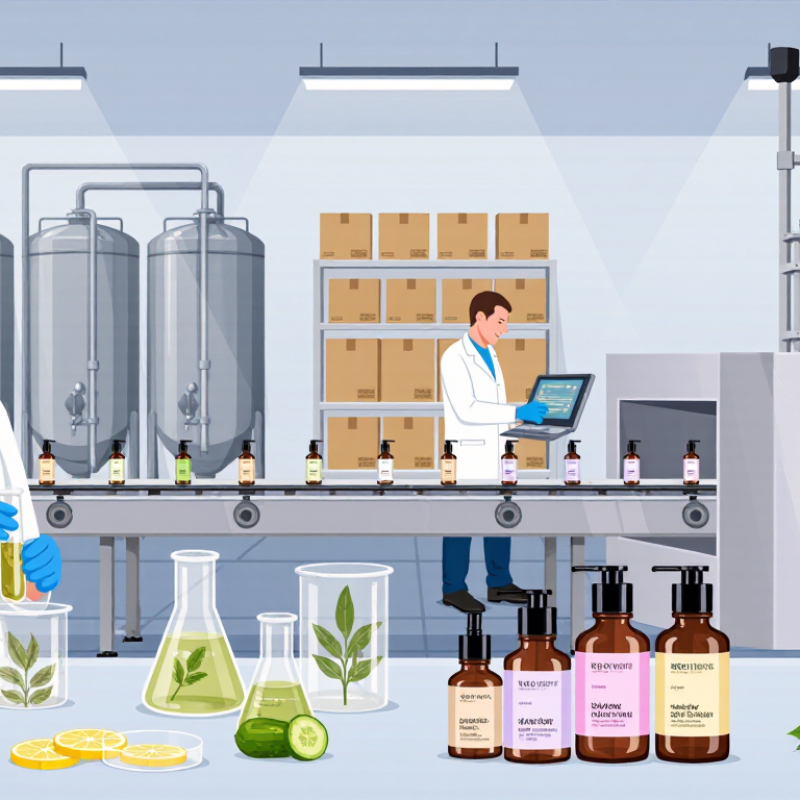
Vegan skincare contract manufacturing is the outsourced creation of skincare products without animal-derived ingredients. A specialized manufacturer may develop, test, produce, fill, and pack products for another company. The client usually provides a product brief, target texture, packaging idea, and expected production volume. The manufacturer then converts that concept into a controlled production process.
The scope begins with ingredient screening and formula development. Experts check materials such as beeswax, lanolin, collagen, and carmine carefully. Plant-based alternatives may improve performance, but they still require stability and safety testing. Laboratory teams assess texture, odor, preservation, microbial quality, and packaging compatibility. Documentation should support supplier traceability and clear ingredient declarations. Vegan status can also require certification, depending on the market and claim strategy.
Production controls matter just as much. Facilities may separate materials, clean shared equipment, and record each manufacturing batch. A practical audit should examine sanitation records, testing procedures, staff training, and release controls. Packaging, labeling support, inventory management, and logistics can also fall within the contract. However, every manufacturer offers a different scope. A formula may appear vegan, yet incomplete supplier records can weaken the claim. The process is not perfectly linear. Small changes in waxes, emulsifiers, or fragrance materials may require another stability review. Careful communication prevents costly surprises.
| Dimension | What It Covers | Typical Vegan Requirement | Practical Output or Control |
|---|---|---|---|
| Definition | The outsourced development and production of skincare products formulated without animal-derived ingredients. | The formula, processing aids, and relevant packaging components must be reviewed for animal-derived materials. | A documented product specification and ingredient review. |
| Product Categories | Cleansers, toners, serums, moisturizers, masks, exfoliants, balms, lotions, and facial or body oils. | Each finished product should have its own formula, specifications, safety assessment, and claims substantiation. | A product portfolio organized by format, skin concern, and intended use. |
| Ingredient Screening | Verification of raw materials such as emollients, humectants, emulsifiers, preservatives, colorants, and fragrances. | Exclude common animal-derived materials including beeswax, lanolin, collagen, keratin, carmine, and some milk or silk derivatives. | Approved ingredient list, supplier declarations, technical documents, and change-control records. |
| Formula Development | Concept design, laboratory samples, sensory adjustment, compatibility checks, and scale-up preparation. | Vegan substitutions must maintain the intended texture, stability, appearance, and performance without animal-derived inputs. | Laboratory batches, formula versions, test results, and final manufacturing instructions. |
| Manufacturing Scope | Batch preparation, filling, labeling, packing, storage, and release of finished skincare products. | Production controls should prevent formulation errors, material mix-ups, and undocumented substitutions. | Batch records, line-clearance checks, in-process controls, and finished-goods release records. |
| Quality and Safety | Microbiological quality, stability, packaging compatibility, preservative performance, and product safety evaluation. | Vegan status does not replace normal cosmetic safety, quality, or regulatory requirements. | Stability reports, microbiological test results, safety documentation, and quality specifications. |
| Animal Testing Policy | The relationship between vegan formulation claims and claims concerning animal testing. | “Vegan” and “not tested on animals” describe different criteria and should not be treated as identical claims. | A separate animal-testing policy and substantiation file where such a claim is used. |
| Certification and Claims | Voluntary vegan claims, third-party certification, label wording, and marketing evidence. | Claim criteria should be defined in advance and supported by traceable supplier and manufacturing records. | Claim review checklist, certification documents where applicable, and approved artwork. |
| Packaging Review | Primary packaging, secondary packaging, adhesives, coatings, inks, and product-contact materials. | Packaging requirements depend on the selected vegan policy; materials should be reviewed for animal-derived components when included in the claim scope. | Packaging specifications, supplier declarations, artwork approval, and compatibility test records. |
| Traceability | Tracking raw-material lots, production batches, packaging lots, and distribution records. | Records must support verification of the vegan status of each relevant batch. | Lot numbers, batch coding, inventory records, release documentation, and recall readiness. |
| Regulatory Compliance | Applicable cosmetic regulations, ingredient labeling, product information, safety files, and market-specific requirements. | Vegan positioning is an additional product attribute and does not remove obligations under applicable cosmetic laws. | Market-specific label review, product documentation, and regulatory release approval. |
| Key Performance Indicators | Measures used to evaluate the manufacturing program and ongoing quality performance. | Typical indicators include approved vegan raw-material coverage, batch acceptance, on-time delivery, complaint rate, and documentation completeness. | Periodic supplier reviews, corrective actions, quality dashboards, and continuous improvement records. |
It is outsourced skincare production without animal-derived ingredients. A manufacturer may develop, test, fill, and pack the products. The client usually supplies the product concept, texture, packaging, and expected volume.
Commonly reviewed materials include beeswax, lanolin, collagen, and carmine. Plant-based alternatives may work well, but performance still requires testing. A formula can look vegan yet lack complete supplier records.
Formulators create samples using plant oils, mineral colorants, or fermentation-derived actives. They assess appearance, scent, texture, and skin feel. Small changes may affect viscosity or preservation.
Samples may undergo heat, room-temperature, and repeated temperature-change testing. Teams examine texture, odor, preservation, and packaging compatibility. Water-based products also need microbiological testing. Results may reveal an uncomfortable truth: the first formula is not ready.
Pilot production exposes problems laboratory samples may hide. Mixing may become uneven, filling may slow, or a pump may fit poorly. Small issues still happen.
Staff clean equipment and document the sanitation process. Operators measure ingredients, record lot numbers, and monitor temperature and mixing speed. Each batch receives controlled release checks.
Finished units are checked for weight, seals, labels, and appearance. Packaging and product claims must match the formula and supporting records. A perfect-looking bottle can still need further review.
They should maintain supplier traceability and clear ingredient declarations. Certification may be useful, depending on the market and claim strategy. Supplier changes require review because they can unexpectedly affect the formula. Communication prevents costly surprises, though it does not prevent every mistake.
Vegan skincare contract manufacturing is the process of working with a specialized manufacturer to develop and produce skincare products without animal-derived ingredients or animal testing. It covers the full production journey, from product concept and formula development to ingredient sourcing, filling, packaging, and delivery. Vegan formulations may use plant-based oils, botanical extracts, minerals, and laboratory-created alternatives, while following clearly defined vegan standards and maintaining product performance, stability, and skin compatibility.
A reliable manufacturing process includes testing raw materials, preparing and mixing formulas, conducting stability and safety checks, and monitoring hygiene throughout production. Quality control and appropriate vegan certification help verify ingredient suitability, production practices, labeling accuracy, and batch consistency. When selecting a manufacturing partner, businesses should evaluate formulation expertise, sourcing transparency, testing capabilities, production capacity, communication, documentation, and experience with certification requirements. The right partner can support efficient development while helping create safe, consistent, and responsibly produced vegan skincare products.