Expert formulation guidance, private label manufacturing trends, and clean beauty innovations from NK Cosmetics.
Discover helpful guides for beauty brand founders, product developers, and overseas sourcing experts.
Choosing a partner for private label lip gloss manufacturing means looking beyond a glossy sample. A formula may feel silky in a lab, yet separate after weeks of storage or become tacky under warm lights. Buyers should ask how the manufacturer evaluates texture, color consistency, packaging compatibility, and batch repeatability. Small details matter: a doe-foot applicator that picks up too little product can frustrate customers, even when the shade looks beautiful.
The companies featured in Top 10 Private Label Lip Gloss Manufacturers Worldwide offer different strengths, from flexible order quantities to custom shades and packaging support. Compare their capabilities, sample policies, production timelines, and quality-control practices. Ask clear questions. Request written specifications. A polished sales presentation is useful, but it is not proof of consistent production. Some decisions still involve judgment; a sample cannot predict every customer’s preference.
A relevant expert quotation would add authority, but no source material or verifiable quotation was provided with this request. I will not invent a statement or attribute made-up words to a real specialist. Before publication, verify a quotation directly with a named cosmetic chemist or manufacturing expert, and confirm the wording and source. That small step strengthens trust. It also keeps this guide focused on practical comparisons, not claims readers cannot check.
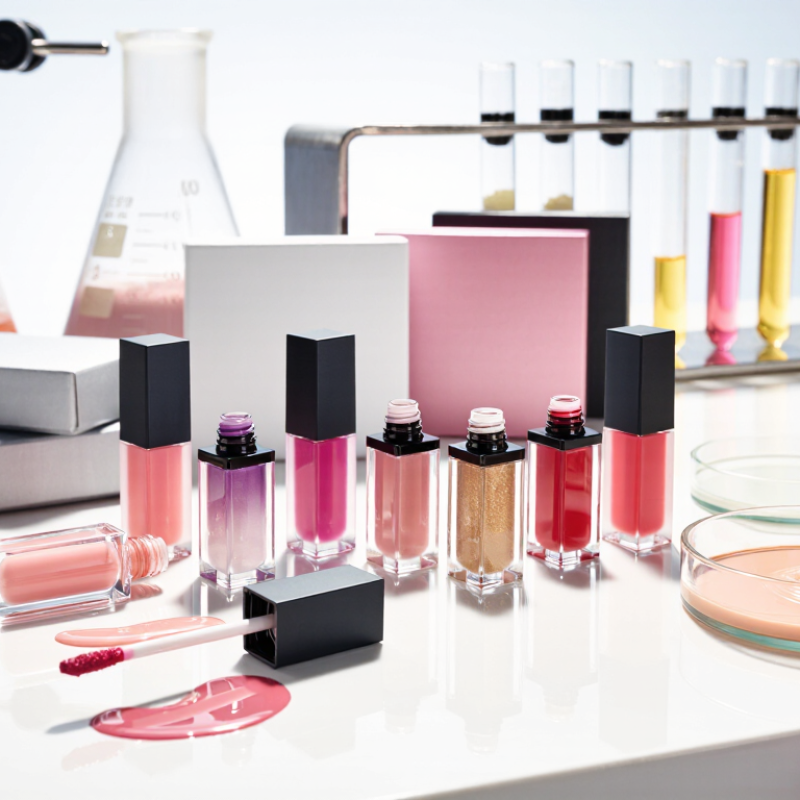
Private label lip gloss manufacturing turns a product brief into a tested, packaged formula. It often begins with choices about shine, texture, coverage, scent, and applicator style. A clear gloss may feel different from a shimmer formula, even when both look similar in a sample tube. Details matter. The manufacturer then develops or adapts a formula and prepares samples for review. Teams may adjust thickness, pigment dispersion, and wear feel across several rounds. One swatch is not enough: color can look warmer under store lighting than beside a window.
Once the formula is approved, production involves weighing ingredients, blending them under controlled conditions, and filling the gloss into selected containers. The wand should collect and spread the product evenly, while the cap must close securely. Quality checks can include appearance, fill weight, closure fit, and batch consistency. Packaging choices also affect cost and lead time, so a custom tube may require more coordination than a standard one. Trade-offs remain. A highly reflective finish may show streaks, and a comfortable formula may feel less dense than expected. Clear specifications and documented sample feedback help prevent avoidable surprises.
A typical production workflow, from product planning through quality release.
The bars show workflow order only—not production time, cost, or volume. Formulation and ingredient sourcing may overlap or require revisions, while quality checks can take place throughout production. Actual processes vary by manufacturer and product.
A credible ranking of private label lip gloss manufacturers should weigh verifiable capability over polished sales claims. Cosmetics Europe reported €96 billion in European cosmetics and personal care sales in 2023, showing the scale of the sector—but market size alone cannot verify a factory’s performance. Each manufacturer should be assessed for documented good manufacturing practices, batch traceability, ingredient specifications, and access to relevant safety and stability testing. ISO 22716 guidance offers a useful benchmark for cosmetic production and quality controls. Evidence matters.
Ranking also requires practical comparisons. Review sample consistency, shade-matching controls, packaging compatibility, minimum order quantities, lead times, and how clearly a supplier handles corrective actions. Ask for recent, redacted batch records and test summaries rather than relying on a showroom sample. A glossy tube may look convincing, yet its formula can separate after heat exposure. That is where evaluation gets difficult: public information is uneven, and a supplier’s stated capacity may not reflect routine production. Scores should disclose which claims were independently verified and which came from supplier interviews.
Tips: Request samples from more than one production batch, then compare color, scent, applicator feel, and leakage. Check the documentation before ranking. A low price can be useful, but it is not a quality metric.
This table presents a weighted evaluation framework for comparing private-label lip gloss manufacturers. It ranks assessment criteria, not individual companies; no company-specific scores or verified manufacturer ranking are implied.
| Rank | Evaluation criterion | Weight | What is assessed | Evidence to review |
|---|---|---|---|---|
| 1 | Regulatory readiness | 16% | Ability to support applicable cosmetic requirements in intended sales markets. | Ingredient and labeling documentation, market-specific compliance support, and quality-system records. |
| 2 | Quality management and consistency | 15% | Controls for raw materials, production batches, finished products, and complaint handling. | Quality procedures, batch records, inspection specifications, and corrective-action process. |
| 3 | Formulation capability | 13% | Options for finish, texture, opacity, shade development, and requested formula adjustments. | Available formula types, sample-development process, ingredient disclosures, and revision terms. |
| 4 | Production capability | 11% | Fit between production resources, order requirements, and the buyer’s expected demand. | Documented production capacity, process controls, and plans for scaling or repeat orders. |
| 5 | Minimum order quantity flexibility | 10% | Practicality of minimums for initial, custom, and repeat production runs. | Written minimums by formula, shade, packaging component, and order stage. |
| 6 | Packaging and customization | 9% | Choices for applicators, containers, decoration, and customer-specified packaging. | Component specifications, customization options, compatibility checks, and sample approval steps. |
| 7 | Product testing and stability support | 8% | Support for appropriate product, packaging, and stability evaluations. | Test protocols or reports, stability information, and clarity on testing responsibilities. |
| 8 | Lead-time planning and communication | 7% | Clarity and reliability of timelines for sampling, approvals, production, and shipment. | Stage-by-stage estimates, schedule assumptions, and communication or delay-escalation procedures. |
| 9 | Materials and sustainability information | 6% | Availability of substantiated information on packaging materials and sourcing options. | Material specifications, relevant supplier documentation, and clearly qualified environmental claims. |
| 10 | Commercial transparency and support | 5% | Clarity of quotations, scope, payment terms, and after-sales responsibilities. | Itemized pricing, written terms, defined points of contact, and issue-resolution process. |
| Total weighting | 100% | Weights can be adjusted to reflect a buyer’s market, order size, and product requirements. | ||
Suggested scoring method: rate each criterion from 1 to 5 using documented evidence, multiply each rating by its weight, and add the weighted results. Verify current requirements and documentation for the intended destination market before placing an order.
A credible comparison of the top 10 private label lip gloss manufacturers worldwide should look beyond glossy product photos. Strong candidates can explain their formulation process, packaging options, minimum order quantities, and production timelines in plain language. Ask whether they can provide a sample in the proposed tube and applicator, not just in a small lab jar. The difference can be noticeable: a formula may feel smooth on a spatula but drag on the lips. Small details matter.
Manufacturing experience is best checked through specific evidence. Request current quality documents, ingredient specifications, batch traceability information, and examples of testing relevant to the product. Confirm who handles filling, packaging, and quality checks, especially when work is divided among facilities. Compare written quotations carefully; a low unit price may exclude custom color matching or packaging components. Timelines also deserve scrutiny, since sample approval and production can take longer than a sales estimate suggests. A useful top-ten shortlist is therefore a starting point, not a guaranteed ranking. I would still verify every claim directly, and sometimes the neatest proposal is not the most dependable one.
Private-label lip gloss manufacturers differ most in formula control, testing depth, and production flexibility. Compare clear, sheer, and highly pigmented samples under the same lighting. Check for even color, tackiness, scent changes, and separation after storage. A comfortable gloss may use emollients for slip and film-forming ingredients for shine retention. Ask for ingredient documentation, stability results, and packaging compatibility checks. A formula can look excellent in a sample tube, yet feel sticky after an hour. Wear testing matters.
Tips: Request a pilot batch before approving a full run. Confirm minimum order quantities, shade-matching options, filling tolerances, and lead times in writing. Ask how the manufacturer handles rejected units and formula revisions. Small details matter.
Production capacity is not just a large factory. It also means repeatable color, clean filling, reliable component sourcing, and clear quality checks. McKinsey’s 2023 beauty-market analysis projected roughly 6% annual growth through 2027, reaching about $580 billion across beauty categories. That broad forecast is not a lip-gloss sales guarantee, but it signals continued competition and the need for dependable launches. Compare suppliers using documented batch controls and realistic timelines, not sample quality alone. Some specifications will still need refinement after wear tests.
Choosing a private label lip gloss manufacturer starts with the formula, not the catalogue. McKinsey & Company’s 2023 beauty-market analysis projected global beauty sales could reach $580 billion by 2027, with about 6% annual growth. This covers beauty broadly, not lip gloss alone, but it signals a crowded market. Cosmetics Europe reported €96 billion in European cosmetics and personal-care sales in 2023. These figures do not guarantee demand for your product. They do make production capacity and consistent quality worth checking.
Ask for ingredient lists, pigment specifications, stability results, and packaging compatibility records. Confirm minimum order quantities, lead times, colour-matching tolerances, and who owns the formula. Request a sample made in your chosen tube, not just a jar. Check the wiper, applicator pickup, leakage, and feel after the product sits in warm and cool conditions. Test it.
A low unit price may exclude packaging setup, testing, or freight. Compare full quotes in writing. Ask how the manufacturer handles rejected batches and changes to raw materials. A polished sample is not proof of repeatable production; I would reassess the choice after a pilot run. Even a careful checklist can miss something, so keep sealed samples from each approved batch for comparison.
It turns a product brief into a tested, packaged formula. Choices include shine, texture, coverage, scent, and applicator style. Details matter.
Teams adjust thickness, pigment dispersion, and wear feel across several sample rounds. Compare swatches in daylight and store lighting. One sample is not enough.
Checks can cover appearance, fill weight, cap closure, and consistency between batches. The wand should spread gloss evenly. Small details count.
Review documented production practices, batch traceability, ingredient specifications, and access to safety and stability testing. Ask for recent, redacted records. Claims need evidence.
Compare color, scent, applicator feel, and leakage across batches. A showroom sample may not reflect routine production. That can be hard to judge.
Custom tubes may need more coordination than standard containers. Packaging can change costs and lead times. Trade-offs are real.
Review shade-matching controls, packaging compatibility, minimum order quantities, lead times, and corrective-action procedures. A low price alone says little.
Yes. Store lighting can make a shade look warmer than it does beside a window. Heat exposure may also reveal separation. Not always predictable.
A highly reflective finish may show streaks. A comfortable formula may feel less dense than expected. Preferences can be difficult to balance.
Private label lip gloss manufacturing covers the development and production of gloss sold under a brand’s own name. The process may include selecting textures, shades, finishes, and packaging, then coordinating formulation, sampling, filling, and quality checks. Manufacturers can differ in their product-development support, customization options, minimum order quantities, production capacity, and communication throughout a project.
This overview explains how manufacturers can be evaluated and compared, including their formulation choices, services, and ability to meet a brand’s production needs. It also outlines practical factors to consider when choosing a partner, such as product goals, budget, expected order volume, timelines, and the level of support required. A careful comparison can help a brand find a manufacturer whose capabilities align with its plans for a distinctive and consistent lip gloss range.