Expert formulation guidance, private label manufacturing trends, and clean beauty innovations from NK Cosmetics.
Discover helpful guides for beauty brand founders, product developers, and overseas sourcing experts.
Choosing a private label face toner supplier is not simply a search for the lowest quote. The right partner should help turn a product concept into a consistent formula, clear packaging, and a realistic production plan. A toner may look simple on a shelf, but its feel, scent, ingredient choices, and compatibility with the bottle all affect the customer experience. Details matter.
Ask how the supplier develops or adapts formulas, evaluates product stability, and checks consistency between batches. Request relevant product specifications and quality documents, and clarify what testing is included before production. A confident sales pitch is not enough. Look for specific answers and a willingness to explain limitations, timelines, and potential trade-offs. I would also compare sample batches in ordinary use, not just judge a formula by its first impression. That step can be easy to overlook.
Before committing, discuss minimum order quantities, sample fees, lead times, packaging options, and who handles each production stage. Confirm that ingredient and product information can be reviewed for your intended market, with appropriate professional guidance where needed. Reliable communication matters, especially when a label change or delayed component affects launch timing. Small details count. A supplier may offer attractive customization yet have limited flexibility once an order is underway. There is no perfect checklist, and one conversation rarely reveals everything. Compare written information, test samples, and ask follow-up questions before choosing a long-term partner.
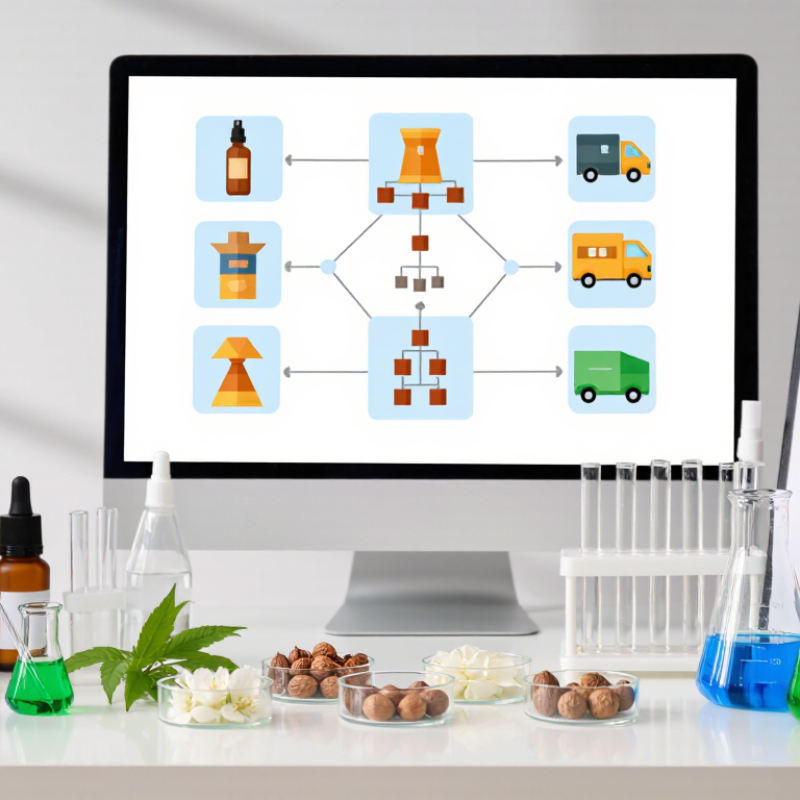
Before contacting a private-label supplier, define what your toner must do and who will use it. Is it a light, fragrance-free layer for sensitive-feeling skin, or a refreshing step for oily-feeling skin? Set measurable goals for texture, scent, finish, target price, package size, and launch volume. Keep it measurable.
McKinsey’s 2023 beauty-market report projected global beauty sales could reach $580 billion by 2027, with about 6% annual growth. That forecast is broad, not toner-specific. Use it as context, not proof of demand.
Write a one-page brief that separates must-haves from preferences. Specify your preferred ingredients, but also ask suppliers about their documentation and testing capabilities. Request samples in the intended bottle, then assess how quickly the toner absorbs, whether it leaves a tacky feel, and how the pump or cap works.
Cosmetics Europe reported European cosmetics and personal-care retail sales of €96 billion in 2023. This figure covers a broad category, so it cannot validate your toner concept.
That distinction matters. Ask suppliers to confirm minimum order quantity, lead time, revision policy, and formula ownership. A brief can still be wrong; early samples may expose a mismatch between the formula you imagined and the finish customers actually want. Not every preference deserves a launch delay.
How to Choose a Private Label Face Toner Supplier?
Assess Supplier Expertise and Formulation Capabilities
A capable toner supplier should explain how its team moves from brief to repeatable batch. Ask who develops the formula, how they select humectants and soothing ingredients, and what pH range they target. The global skincare products market was valued at USD 142.14 billion in 2023, with a projected 4.8% annual growth rate through 2030, according to Grand View Research. That growth makes clear product differentiation useful, but market demand cannot verify a formula’s quality. Samples can mislead.
Request stability results, microbial testing records, and packaging compatibility data for the specific formula. Ask how heat, light, and storage time may change its scent, color, or viscosity. ISO 11930 describes methods for evaluating antimicrobial protection in cosmetics; a supplier should be able to explain relevant test methods and results. Review ingredient specifications and batch documentation, too. A polished sample is only a starting point, and even experienced teams can overlook a packaging issue until later testing.
Tips: Ask for raw data, not just a “passed” label. Request a small pilot batch, then compare its pH and appearance with the approved sample. Confirm who investigates deviations and how changes are recorded. If answers stay vague, pause and ask again.
A face toner may look simple, but water-based formulas need careful microbial control. Ask whether the factory follows ISO 22716 cosmetic GMP, then review its latest audit evidence—not just a certificate. Request batch-specific certificates of analysis, microbial test results, and preservative efficacy testing. Check that stability studies cover heat, cold, and the proposed packaging; a formula can change when it meets a pump, cap, or liner. The European Commission’s 2023 Safety Gate report recorded 3,412 alerts, with cosmetics accounting for 32%. These alerts cover many product types, not toners alone, but they underline why documented controls matter. Details matter.
Review the test methods, sample identification, acceptance limits, and dates. A one-page “passed” statement is weak evidence. Ask for the safety assessor’s rationale, ingredient specifications, and a clear process for investigating out-of-specification batches. Check pH drift and odor, too. I would not treat a pleasant sample as proof of long-term safety; that shortcut is tempting, but poor. Confirm that labels, ingredient lists, and product claims match the intended market. For U.S. sales, clarify who manages applicable MoCRA duties, including product listing and serious adverse-event reporting. For EU sales, verify the safety assessment and supporting product records. Get responsibilities in writing before production.
A private label face toner supplier should show more than a large factory number. Ask how many filling lines handle liquid skincare, and whether those lines are shared with other products. A supplier may quote monthly capacity, but that figure means little if your order competes for the same equipment. Request a sample production schedule and details on batch testing. Ask for proof.
Minimum order quantities affect both cash flow and product freshness. Compare the smallest practical run for your chosen bottle, formula, and packaging—not just the headline MOQ. A lower quantity may cost more per unit, while a larger run can leave cartons sitting in storage. That trade-off is easy to underestimate. Ask whether the supplier can stage production or offer a pilot batch, and confirm any extra setup or packaging fees in writing.
Compare pricing line by line: formula, filling, bottle, label, testing, and freight. A low quote may exclude items you assumed were included. Lead times need the same scrutiny. Ask for separate estimates for sample approval, ingredient sourcing, production, and shipping. Get dates in writing, including what happens if packaging arrives late. Build in a buffer; approvals often take longer than expected, and my own planning would not treat a quoted date as a guarantee. A simple timeline with named milestones makes delays easier to spot.
A good sample should feel consistent from bottle to bottle. Check its scent, color, viscosity, and pH, then test it in the intended packaging. A formula that looks clear in a beaker may behave differently after filling. Ask what stability and packaging-compatibility tests support the supplier’s recommendations; a sample alone cannot prove shelf life. Small details matter.
Communication is part of quality control. Send a few specific questions about ingredient changes, test methods, lead times, and how problems are documented. Notice whether answers are clear and consistent, not just fast. McKinsey’s 2020 survey of supply-chain executives found that 93% planned to make their supply chains more resilient. This broad, cross-industry finding is not toner-specific, but it underscores why backup plans and dependable updates deserve attention. I would still verify a supplier’s actual process rather than rely on a polished capability sheet.
Tips: Request samples from more than one production batch, if available. Keep written notes on pH, appearance, and packaging performance. Ask for recent quality records and agree on how changes will be communicated. No supplier is flawless; a transparent response to a minor issue can reveal more than a perfect first meeting.
Ask who develops the formula, how ingredients are selected, and what pH range the team targets. Request ingredient specifications and batch records. Samples can mislead.
Request stability results, microbial testing, and preservative efficacy data for the specific formula. Check sample identification, test dates, methods, and acceptance limits. Details matter.
Ask for compatibility data using the intended bottle, pump, cap, and liner. Confirm how heat, light, and storage may affect scent, color, or thickness.
No. Compare a pilot batch with the approved sample, including its pH and appearance. A pleasant sample alone is weak evidence.
Review recent audit evidence, batch-specific analysis, and the process for handling out-of-specification results. Confirm how deviations are investigated and recorded. Ask for raw data.
Ask how many lines handle liquid skincare and whether they are shared. Request a sample schedule and confirm how batch testing fits into production.
Compare the smallest practical run for your chosen formula and packaging. Lower quantities may raise unit costs; large runs may leave cartons in storage. Easy to miss.
Compare formula, filling, bottle, label, testing, and freight as separate costs. Get dates for samples, sourcing, production, and shipping in writing. Add a buffer; quoted dates are not guarantees.
Choosing the right private label face toner supplier begins with a clear product brief. Define the toner’s intended purpose, texture, key ingredients, target customer, packaging preferences, and desired price range. Then assess whether potential suppliers have the formulation expertise and production capabilities to meet those needs, including the ability to discuss ingredient options and develop samples for review.
Before making a commitment, check the supplier’s quality controls, safety testing practices, and readiness to meet the requirements of your intended markets. Compare minimum order quantities, production capacity, pricing, and lead times, looking at the full cost and schedule rather than one factor alone. Finally, evaluate samples for quality and consistency, and pay attention to how clearly and promptly the supplier communicates. A dependable partner should be transparent, responsive, and capable of supporting your product as your business grows.